What is Moltbot? The Clawd.bot Phenomenon and the Future of AI Agents
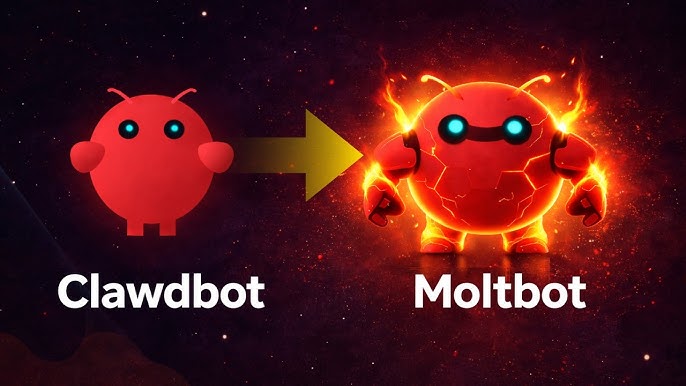
In early 2026, the novelty of "chatting" with AI has officially worn off. We no longer want an AI that just talks; we want an AI that does. Clawd.bot (recently rebranded as Moltbot) has emerged as the definitive answer to this demand—a sovereign, personal AI agent that lives on your hardware and acts as your digital hands and eyes.
Key Takeaways
- The "Anti-SaaS" Movement: Moltbot replaces fragmented subscriptions with a single, self-hosted agent that builds its own tools on the fly.
- Proactive Intelligence: It implements "Heartbeats"—autonomous checks on your calendar, server status, and messages without waiting for a prompt.
- Sovereign Hardware: A shift towards "headless" Mac Minis acting as 24/7 personal AI servers, creating a physical "Second Brain."
- Protocol Economy: The future isn't just you talking to bots; it's your Moltbot talking to an airline's bot to negotiate a refund while you sleep.
The project, spearheaded by Peter Steinberger (@steipete), addresses the biggest flaw in modern LLMs: the "Context Gap." While ChatGPT knows everything about the world, it knows nothing about your world—your files, your unread emails, or your specific way of working. Moltbot bridges this gap by sitting directly on your operating system, bypassing the need for cloud-based integrations that leak privacy.
The Three Pillars of Agentic Freedom
Moltbot isn't just a wrapper for Claude or GPT-4. It is a sophisticated orchestration layer designed for three specific types of freedom that SaaS products cannot offer.
1. Command Freedom (The Unified Inbox)
In 2026, our digital lives are fragmented across apps. Moltbot acts as a unified interface (a "One-Box" for everything). You can message your "lobster" via WhatsApp, Telegram, Discord, or iMessage. You can tell it to "summarize my last 5 emails regarding the merger and draft replies," and it executes that across your local system without you ever opening a browser. It treats your OS as an API.
2. Tool Freedom (The Self-Expanding Toolset)
Moltbot comes with a growing library of "Skills." It can control your Spotify, manage Hue lights, interact with GitHub, or search your Obsidian vault. But the revolutionary part is its "self-healing" capability. If you ask it to do something it doesn't know how to do (e.g., "Check the weather in Tokyo"), it can write its own Python script to call a weather API, save that script as a new skill, and use it forever. It learns.
3. Data Freedom (Sovereign AI)
This is the "Endgame" for privacy. Your context—your "Second Brain"—lives on your disk. When Moltbot processes a sensitive legal document or a private family photo, the reasoning might happen in the cloud (via an encrypted API call to Anthropic), but the index, the long-term memory, and the file access remain under your physical control. No data training, no prying eyes.
The Protocol Economy: Agents Talking to Agents
The most exciting implication of Moltbot is what happens when everyone has one. We are moving towards a Protocol Economy.
Imagine you want to schedule a meeting with a colleague. Today, you email back and forth. In the Moltbot era, you tell your agent: "Find time with Sarah." Your Moltbot securely pings Sarah's Moltbot. The two agents negotiate a slot based on your real availability and preferences, and the meeting just appears on your calendar. This extends to commerce: your agent negotiating a better price for car insurance with an insurer's agent, purely via high-speed API handshakes.
| Feature | Moltbot (Sovereign) | Apple Intelligence | ChatGPT / Claude |
|---|---|---|---|
| Data Privacy | Local Index (High) | On-Device / Private Cloud | Cloud Logged |
| Action Taking | Unrestricted (Terminal/OS) | Limited App Intents | Browser / API Only |
| Proactivity | Yes (Cron/Heartbeat) | Reactive (Mostly) | No (Wait for Prompt) |
| Cost | BYO Key (Usage Based) | Free (Hardware Locked) | $20/mo Subscription |
The "Sovereignty Stack": Hardware Requirements
Running a sovereign agent requires a shift in how we think about personal computing. It's no longer just a laptop; it's a server.
- Compute: An M4 Mac Mini is the gold standard (high RAM for local context).
- Network: Tailscale is essential. It creates a private, encrypted mesh network so your phone can talk to your home server from anywhere in the world without exposing ports to the open internet.
- Storage: Fast NVMe SSDs for vector indexing of your entire life's documents.
Conclusion: The End of Apps
Apps were a necessary bridge when computers couldn't understand intent. We needed buttons and menus to tell the machine what to do. Moltbot represents the beginning of the post-app era. When the computer understands "Book me a flight to London," the airline app becomes an invisible implementation detail.
The future is already here—it's just running on a headless Mac Mini in someone's closet.
Deep-Dive FAQ
Does Moltbot work while my computer is asleep?
No. For the bot to be proactive (sending heartbeat checks or running scheduled tasks), the host machine must be awake. This is why "headless" desktops are preferred over laptops for this use case.
Is it safe to give an AI terminal access?
It carries risk. Moltbot includes "Safety Modes" (e.g., Human-in-the-Loop) where it asks for permission before executing destructive commands (like `rm` or file deletions). You define the leash.
What is the "Context Window" limit?
It depends on your backend model. With Claude 3.5 Sonnet or DeepSeek V4, you can stuff massive amounts of context (200k+ tokens) into a prompt, allowing Moltbot to "read" entire books or codebases before answering.